CAN Bus Demo Project Explained
Goals
1. Describe this demo project in detail to help developers customize their own CAN Bus protocol
2. Describe how to export this project to a Nexus Panel
Preparation
- Install and launch ADE: Please go to ADE Reference Manual for downloading ADE
- Download CAN Bus project: Please go to IOT Website download the demo project. Please make sure you download the demo project that fits your ADE version.
Step 1: Launch ADE
Launch ADE:

Step 2: Click to open the demo project “ADE demo_canbus.epgz”
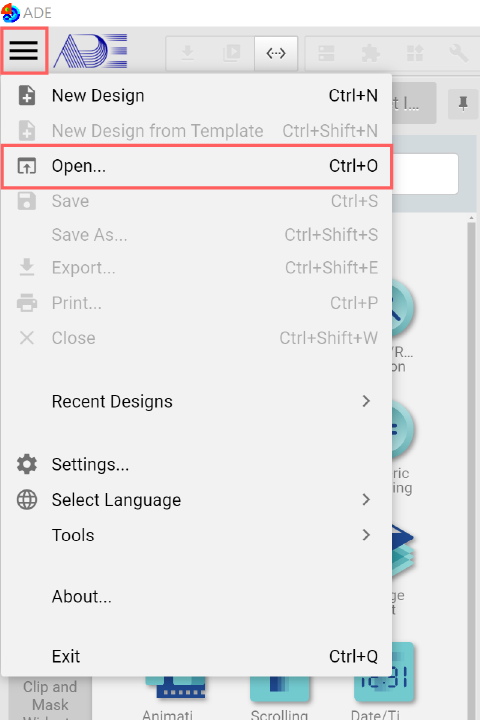
Click the System Menu, press Open and then choose "ADE demo_canbus.epgz".
Once the project is successfully loaded, you will see:
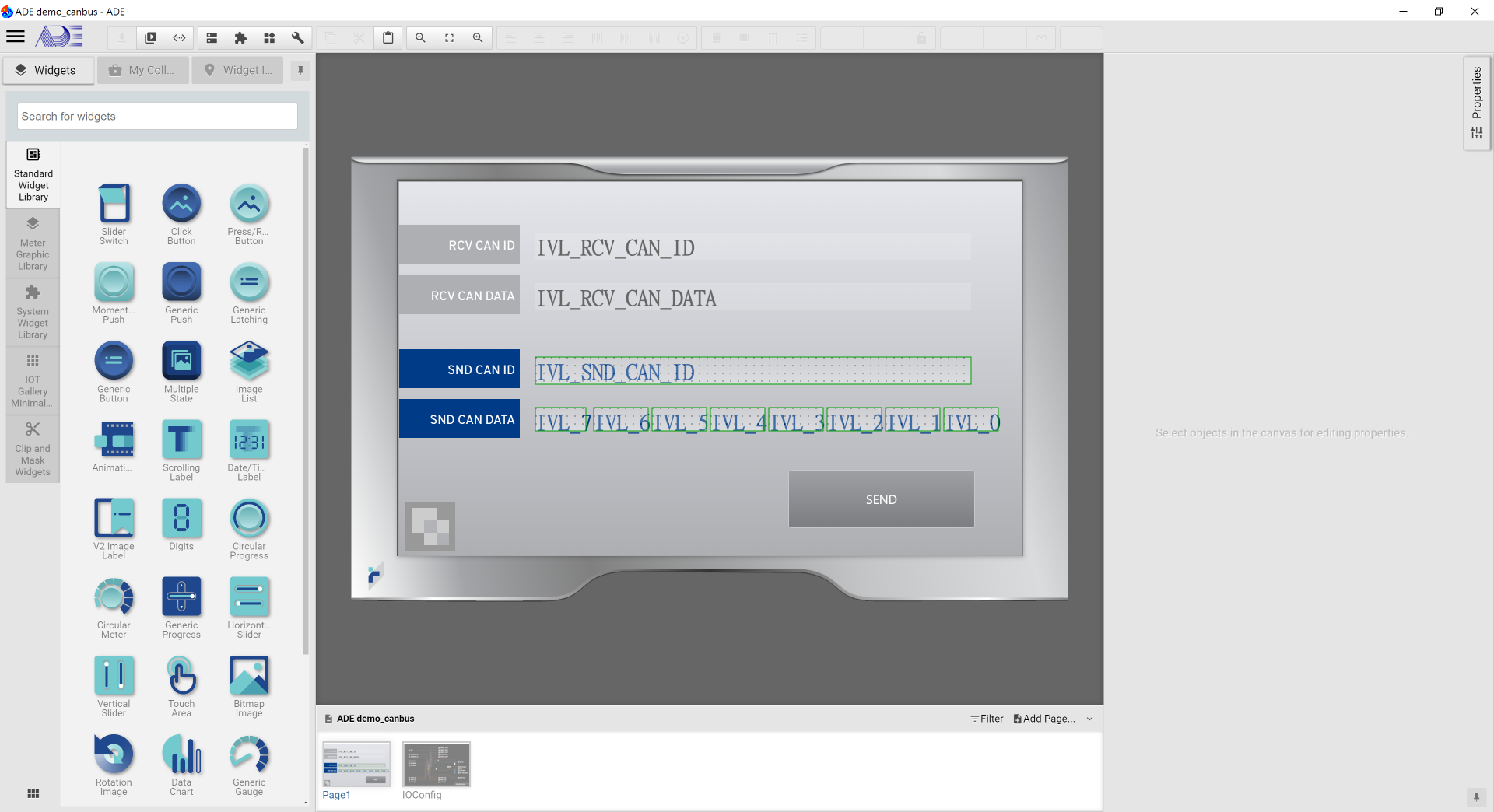
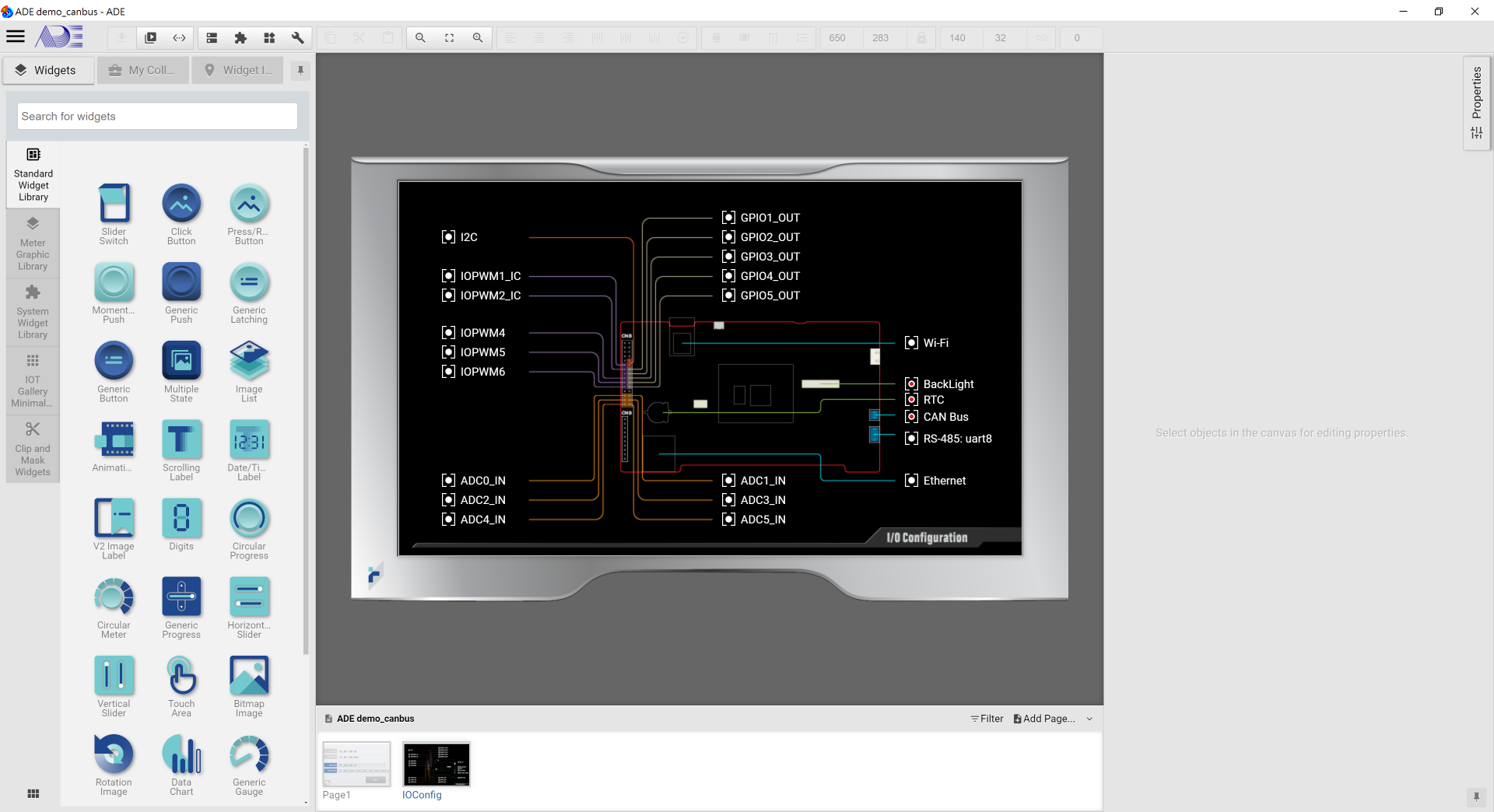
Step 3: Demo Project Explained
Page1
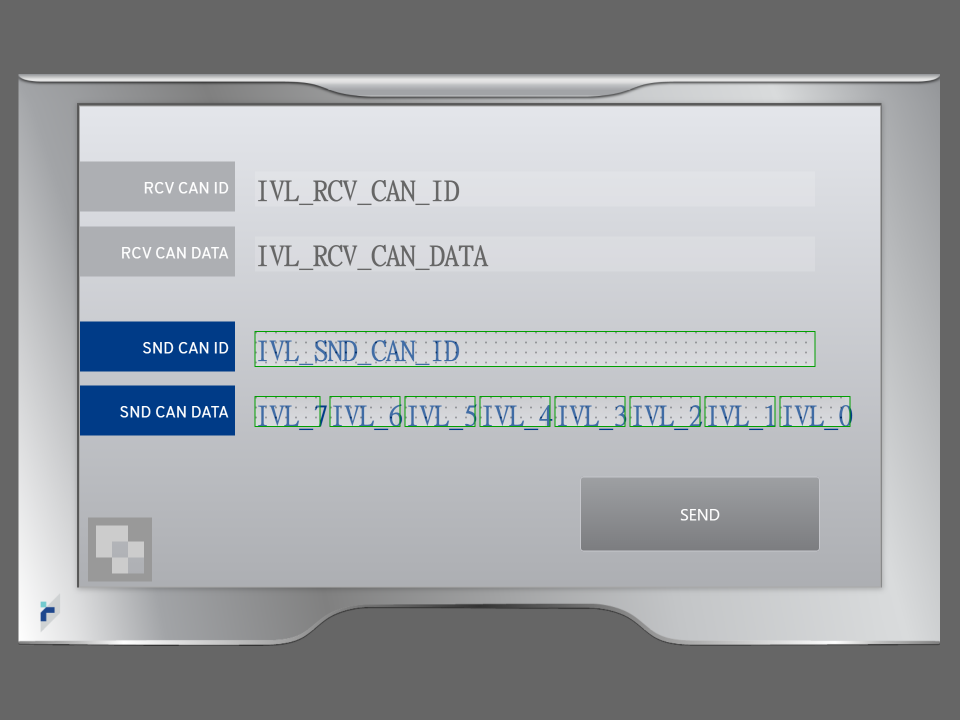
-IVL_RCV_CAN_ID: Display CAN Bus ID. ID is to identify the messages and determine the priority for transmission.
-IL_RCV_CAN_ID: Label "RCV CAN ID".
-IL_RCV_CAN_DATA: Label "RCV CAN DATA".
-IVL_RCV_CAN_DATA: Display the received Data.
-IVL_SND_CAN_ID: Display the ID for the transmit data.
-IVL_SND_CAN_DATA: Display the transmit Data.
-IIP_CAN: Popup Input Pad.
-IVL_0~7: Enter the Data for transmission.
-ITA_SND_CAN_DATA_0~7: Click to enter the data.
-IVL_SND_CAN_ID: Display the ID for the transmission data.
-ITA_SND_CAN_ID: Click to enter the ID for transmit.
-INB_SEND: Click to send the data.
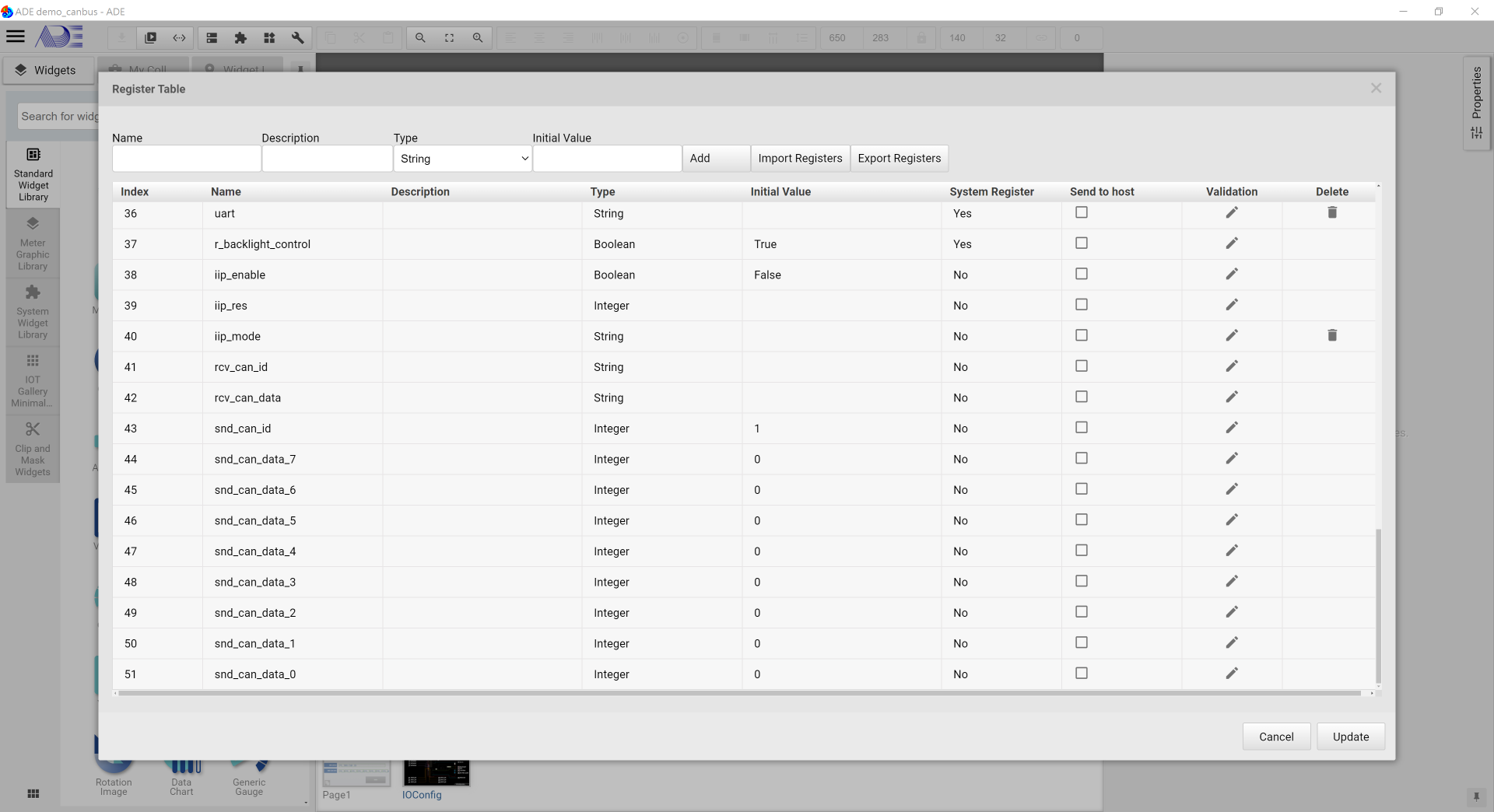
Page 2
Enable IO:

    -Backlight: The screen is locked after 180 seconds of inactivity.
    -RTC: Set the real time clock.
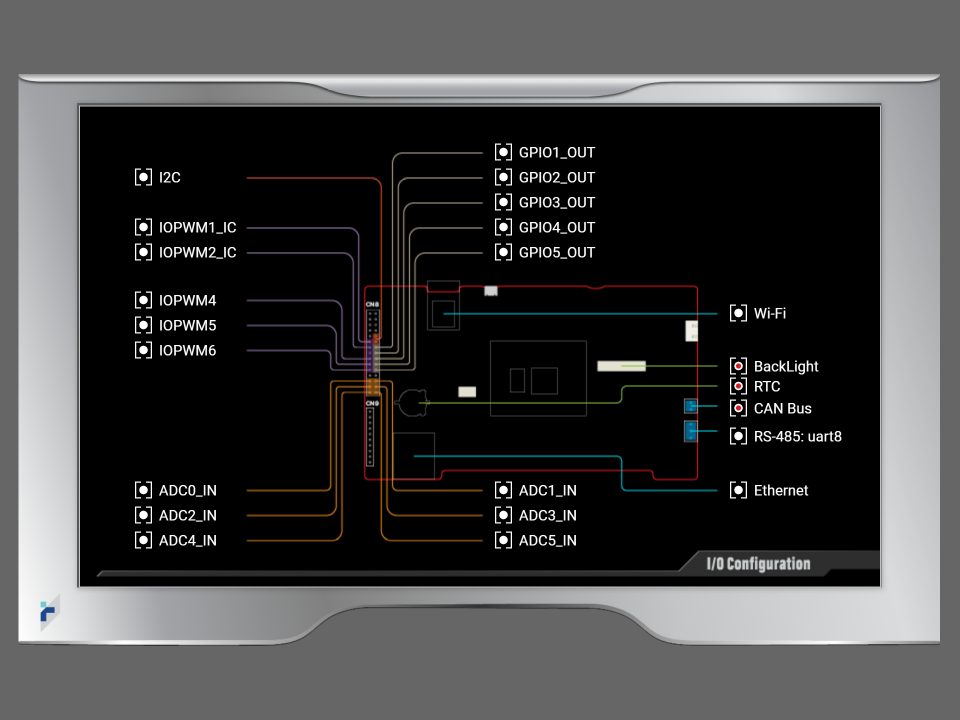
Step 4: Export Demo Project
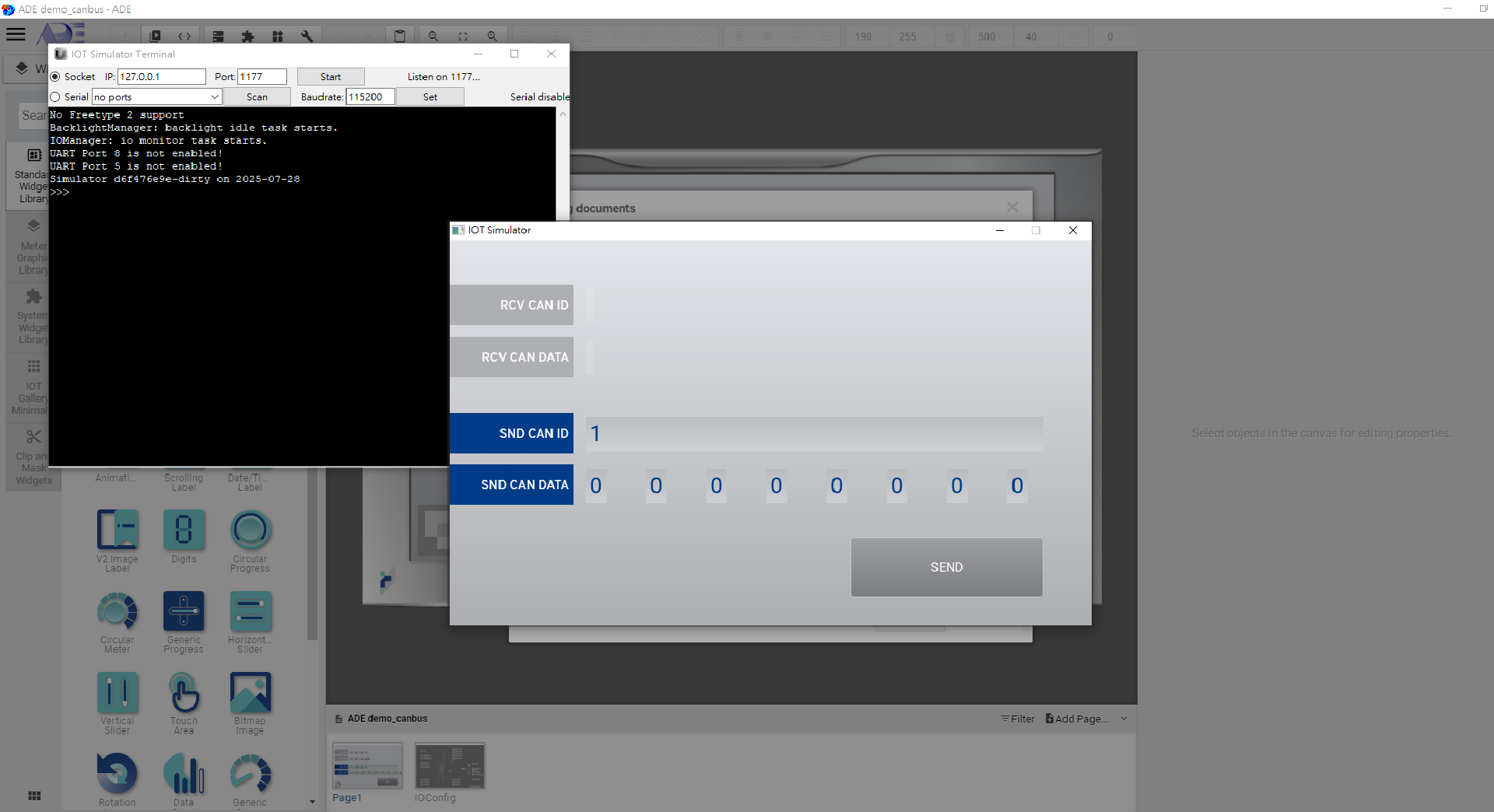
It is recommended to run the demo project in the built-in simulator before exporting the project to an IOT product.
Launch the built-in simulator
Click "Launch Simulator" in the "Download" tool bar.
Once the simulator is launched successfully, users will see:
Export to an IOT panel
1. Please connect the panel with your PC with a USB cable. Then power on the panel.
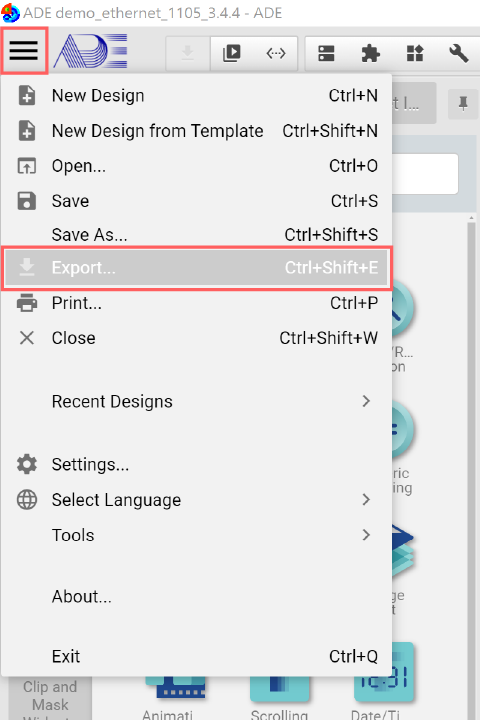
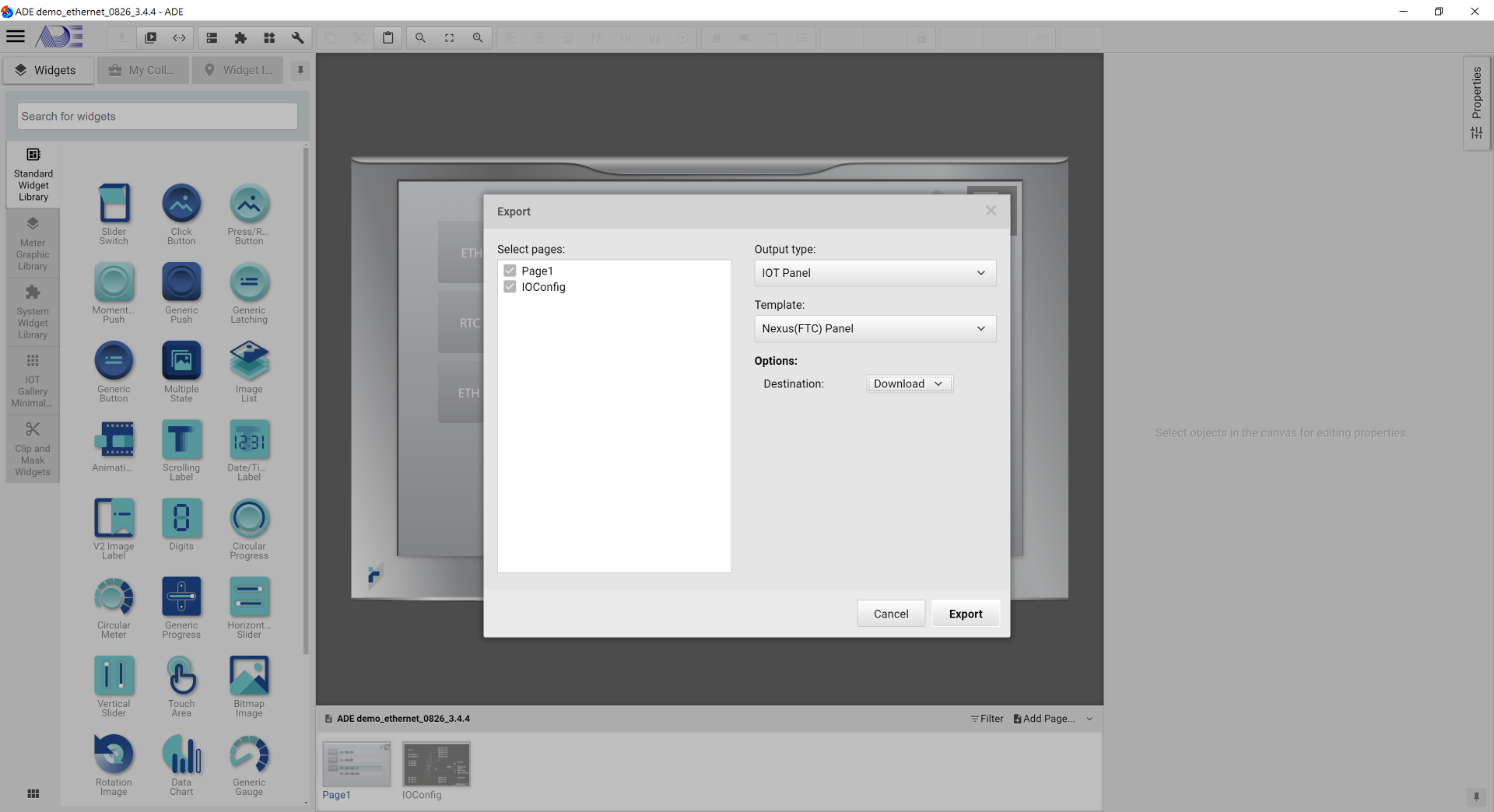
2. In ADE, export the demo project.
3. As shown, in the Export window, please select the Output Type to "IOT Panel", match the template to your target IOT panel and set Options to download. The click Export at the bottom.
1. Once Export is executed successfully, remove the USB cable.
2. Plead prepare a USB-to-CAN Bus device and have the device driver installed in the PC. In our example, we use PCAN-USB.
3. Please download PCAN-View application and set the bit rate to 500Kb/s.
4. In the demo project, please press "SEND" to transmit data. The transmitted data will be shown in PCAN-View's Receive.
5. In PCAN-View Transmit, please enter the data to transmit from the PC to our panel. In the ADE project, the received data are shown on "RCV CAN DATA".

Conclusion
The demo project is to show how the basic CAN Bus operations are done. Users can customize their own CAN Bus communication based on the sample code offered in this project.