1. Describe this demo project in details to help developers customize their own Ethernet protocol
2. Describe how to export this project to a Nexus Panel
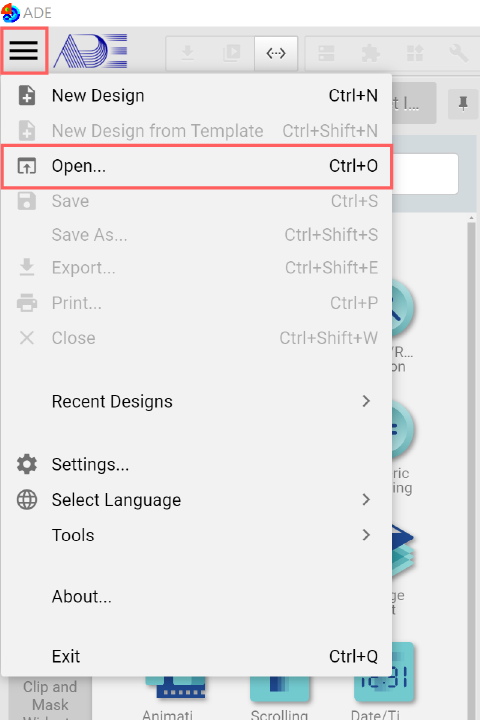
Click top left System Menu, select Open and click "ADE demo_ethernet.epgz" to open this demo project.
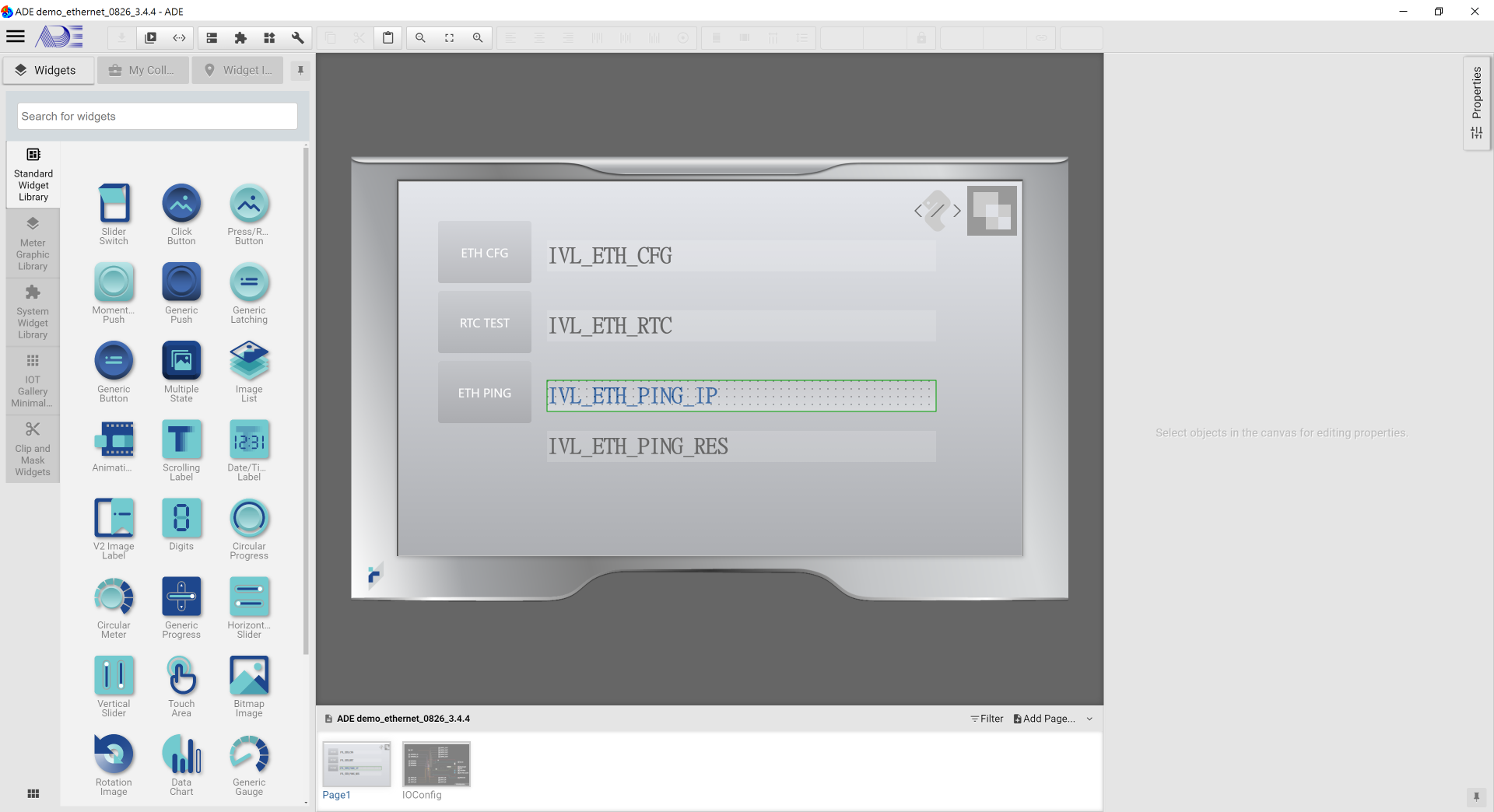
Once the project is successfully loaded, you will see:
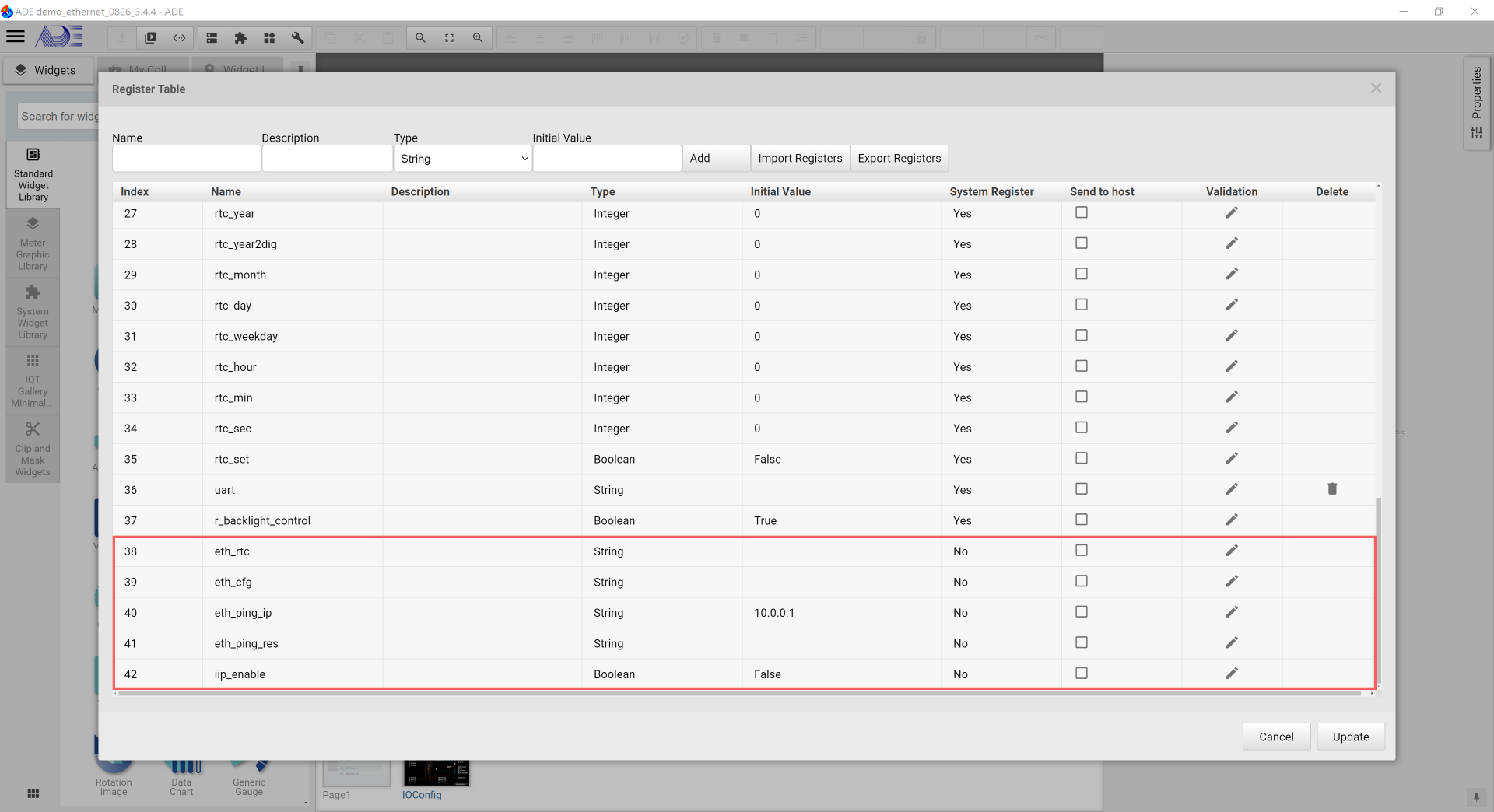
-IVL_ETH_CFG binds the register: eth_cfg
-IVL_ETH_RTC binds the register: eth_rtc
-IVL_ETH_PING_IP binds the register: eth_ping_ip
-IVL_ETH_PING_RES binds the register: eth_ping_res
-ITA: A touch area. Once triggered, a Popup Input Pad is shown for entering the IP address

-ETH CFG: Click to trigger an event, the result is shown on IVL_ETH_CFG
-RTC TEST: Click to trigger an event, the result is shown on IVL_ETH_RTC
-ETH PING: Click to trigger an event, the result is shown on IVL_ETH_PING_RES
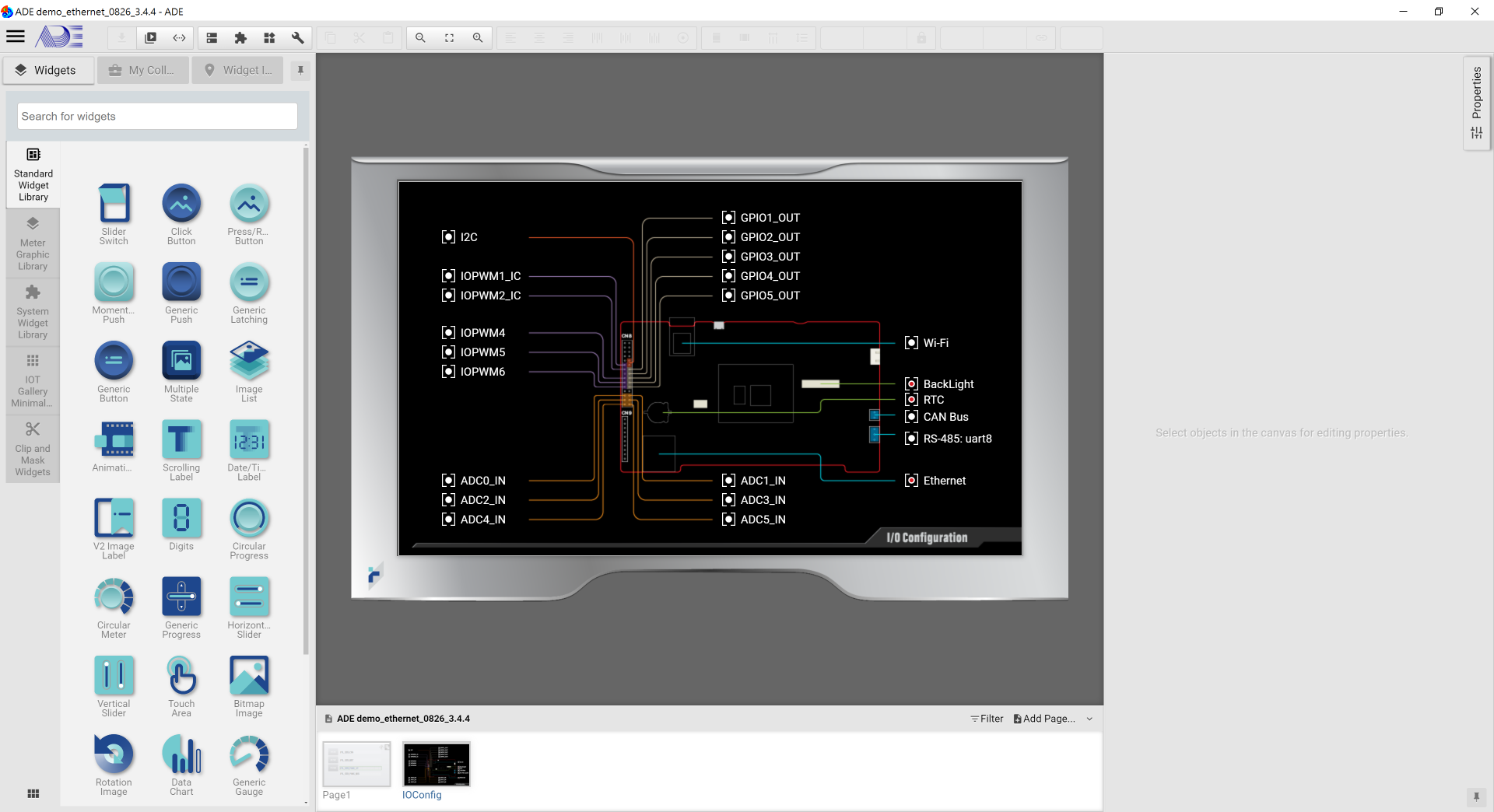
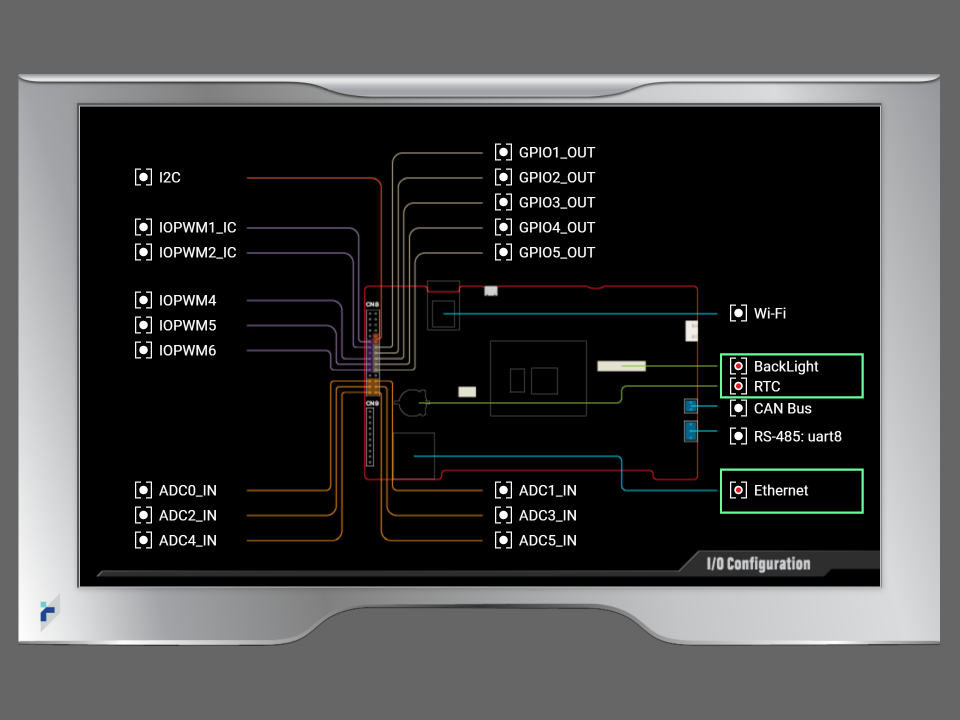
Enable IO:

    -Backlight: The screen is locked after 180 seconds of inactivity.
    -RTC: Set the real time clock
    -Ethernet: Initialize the Ethernet port, and check the connection status
       => Import files
            1. eth.py
            2. uping.py
It is recommended to run the demo project in the built-in simulator before exporting the project to an IOT product.
Click "Launch Simulator" in the "Download" tool bar
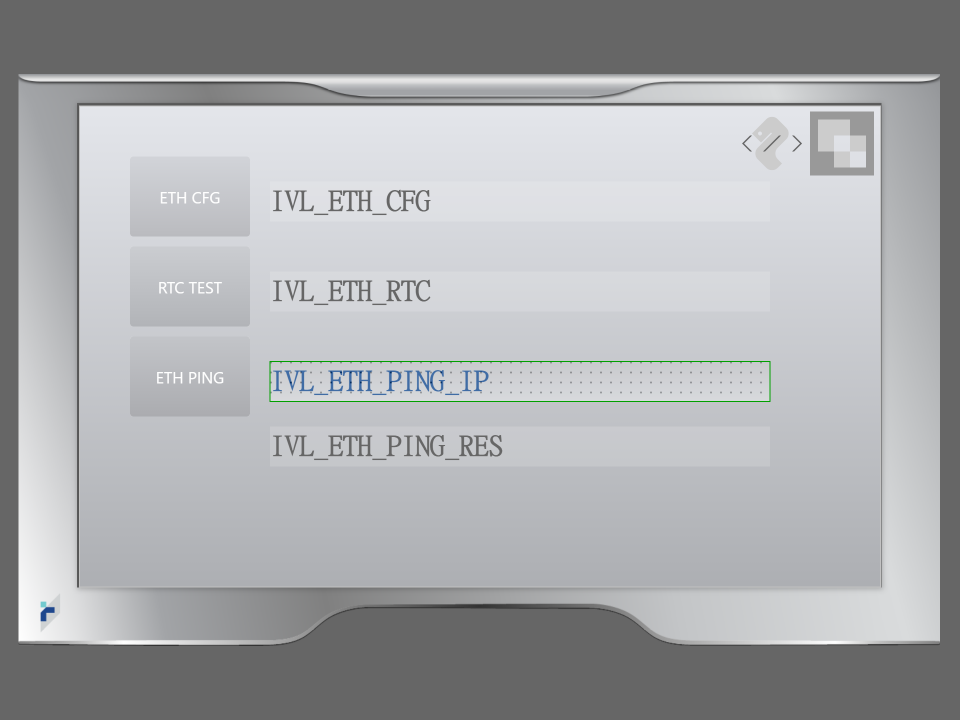
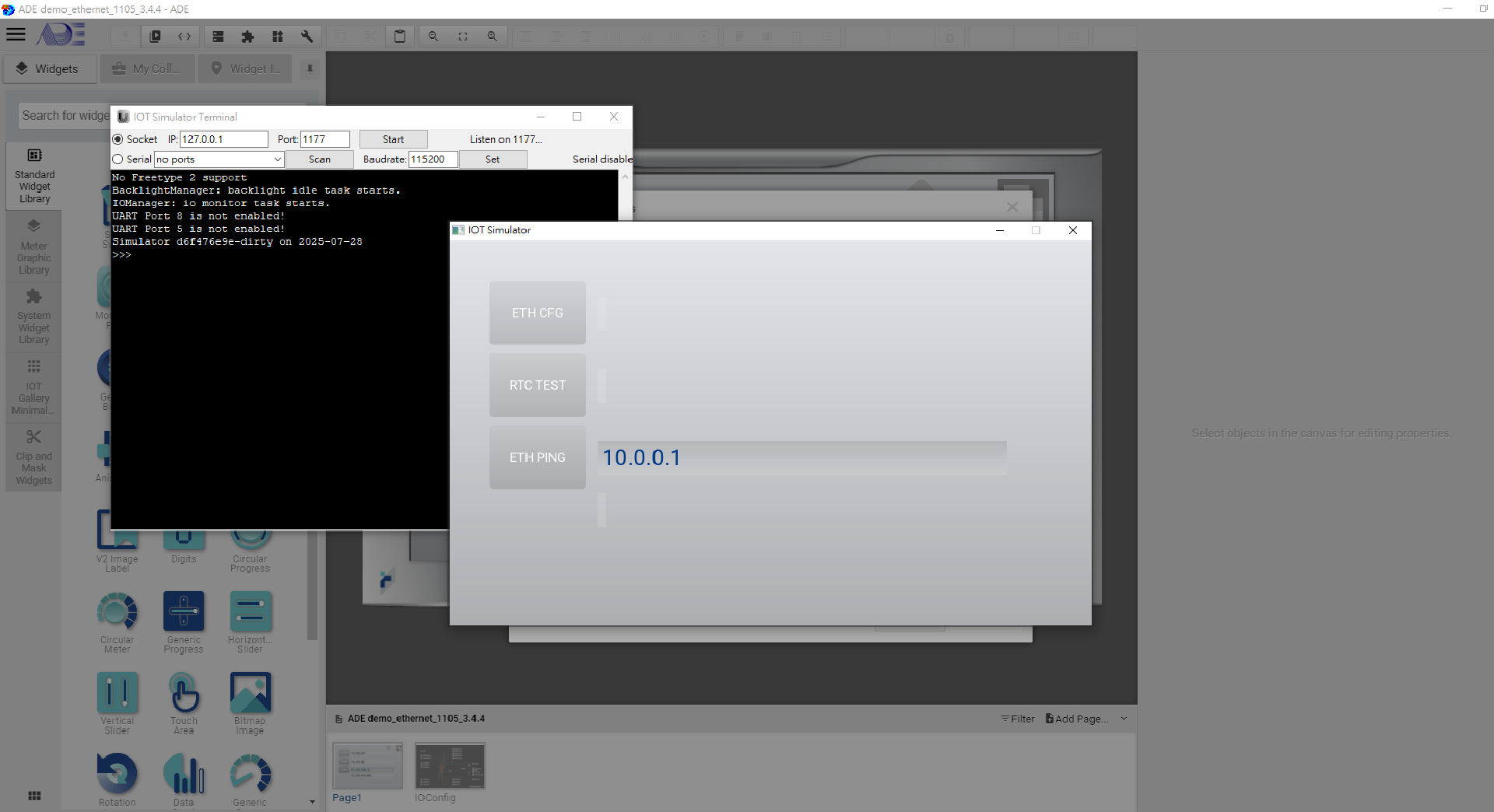
Once the simulator is launched successfully, users will see:
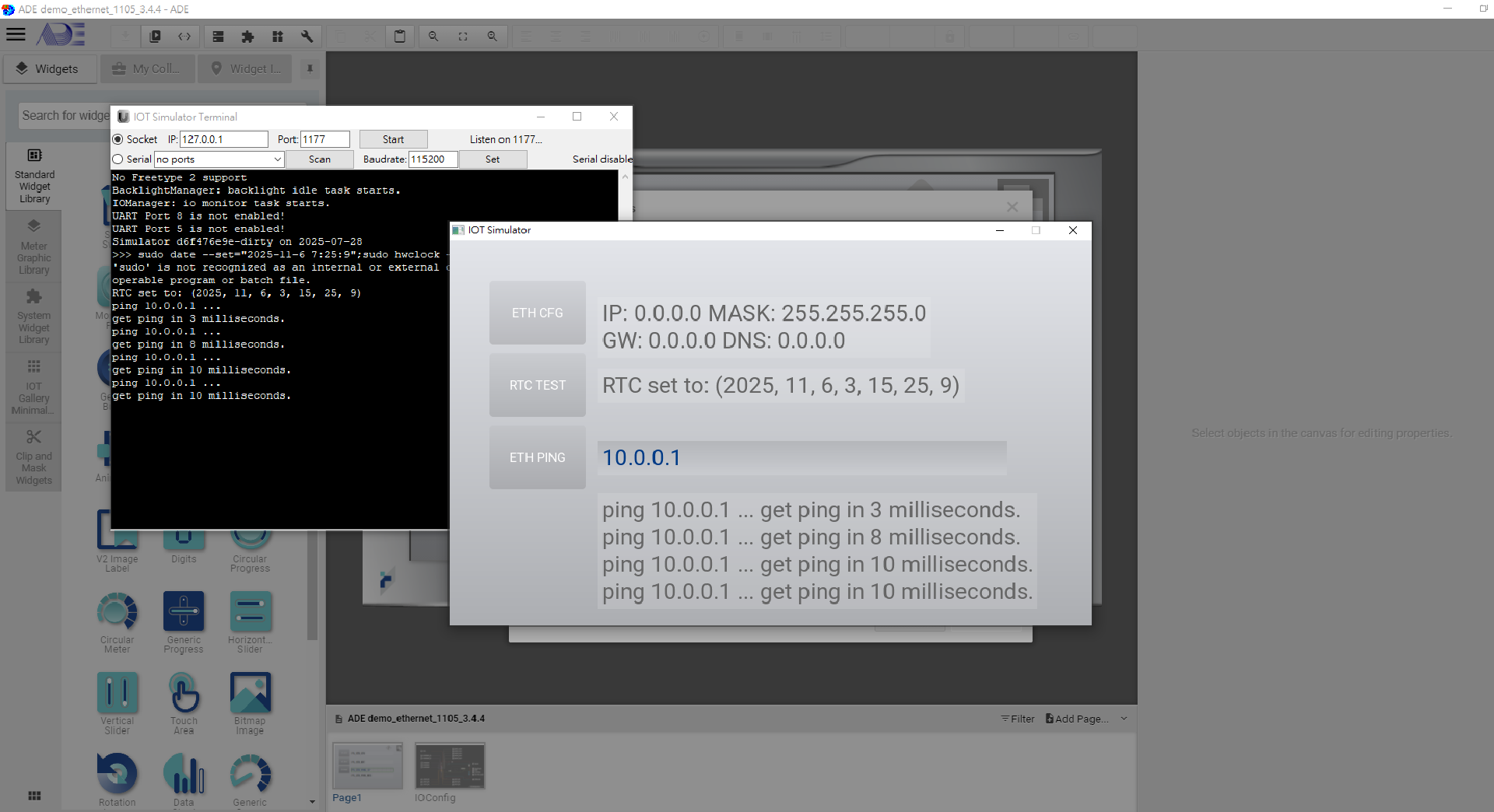
-ETH CFG: Clink and Ethernet configuration is shown
-RTC TEST: Click and the time is shown
-ETH PING: Click and the designated IP Address is pinged

-IVL_ETH_PING_IP: Enter the IP Address (default: 10.0.0.1) for pinging
-IVL_ETH_PING_RES: Show the ping result
1. Please connect the panel with your PC with a USB cable. Then power on the panel.
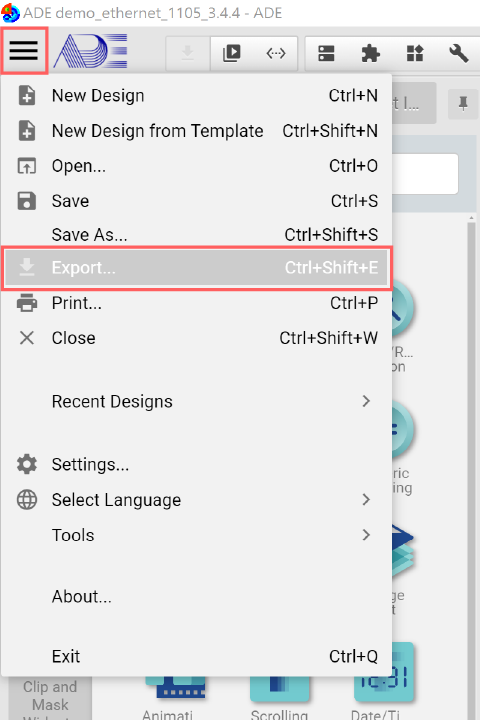
2. In ADE, export the demo project
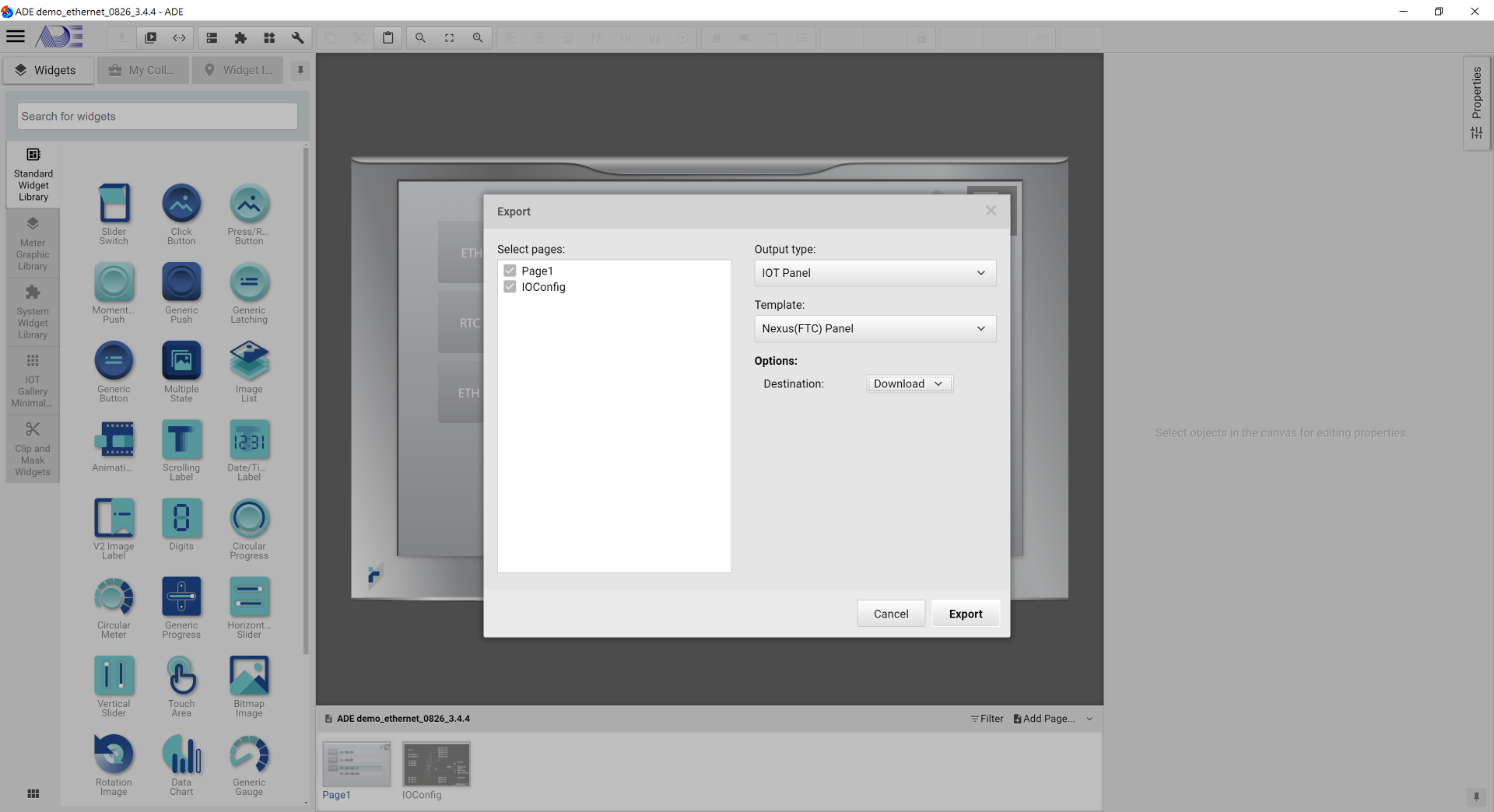
3. As shown, in the Export window, please select the Output Type to "IOT Panel", match the template to your target IOT panel and set Options to download. The click Export at the bottom.
1. Once Export is executed successfully, remove the USB cable.
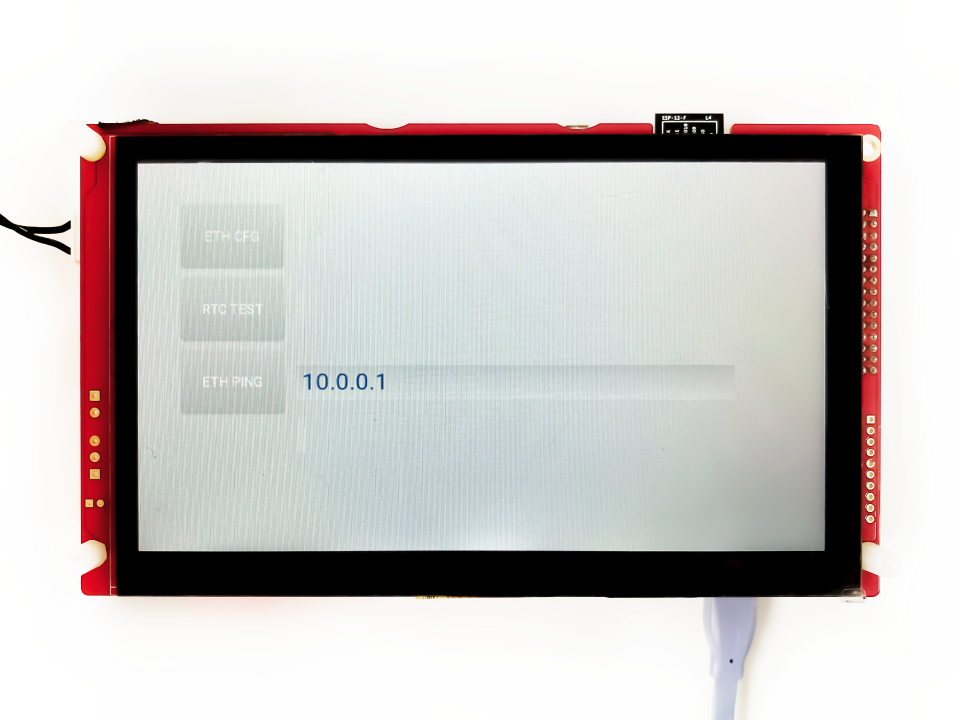
2. Click ETH CFG to collect the IP address, mask, gateway, and dns
3. Click RTC TEST to receive time information (the time information is collected from NTP to ensure the Ethernet connection is established).
4. ETH PING to enter the IP address for pinging (default is 10.0.0.1).
5. The ping results are shown
The demo project is to show how the basic Ethernet operations are done. Users can customize their own Ethernet communication based on the sample code offered in this project.